AI 百变,
设计有常。
AI changes fast.
Design endures.
一场围绕译作《穿越体验设计》展开的对谈。从翻译初衷聊到工程化思维, 从 UX 与 UI 的分野聊到洞察、品味与诚意——在 AI 快速迭代的表象之下, 寻找那些不变的东西。 A dialogue around the Chinese edition of A Project Guide to UX Design — from why it was translated to engineering thinking, from UX versus UI to insight, taste and sincerity. Beneath the rapid churn of AI, we looked for what does not change.
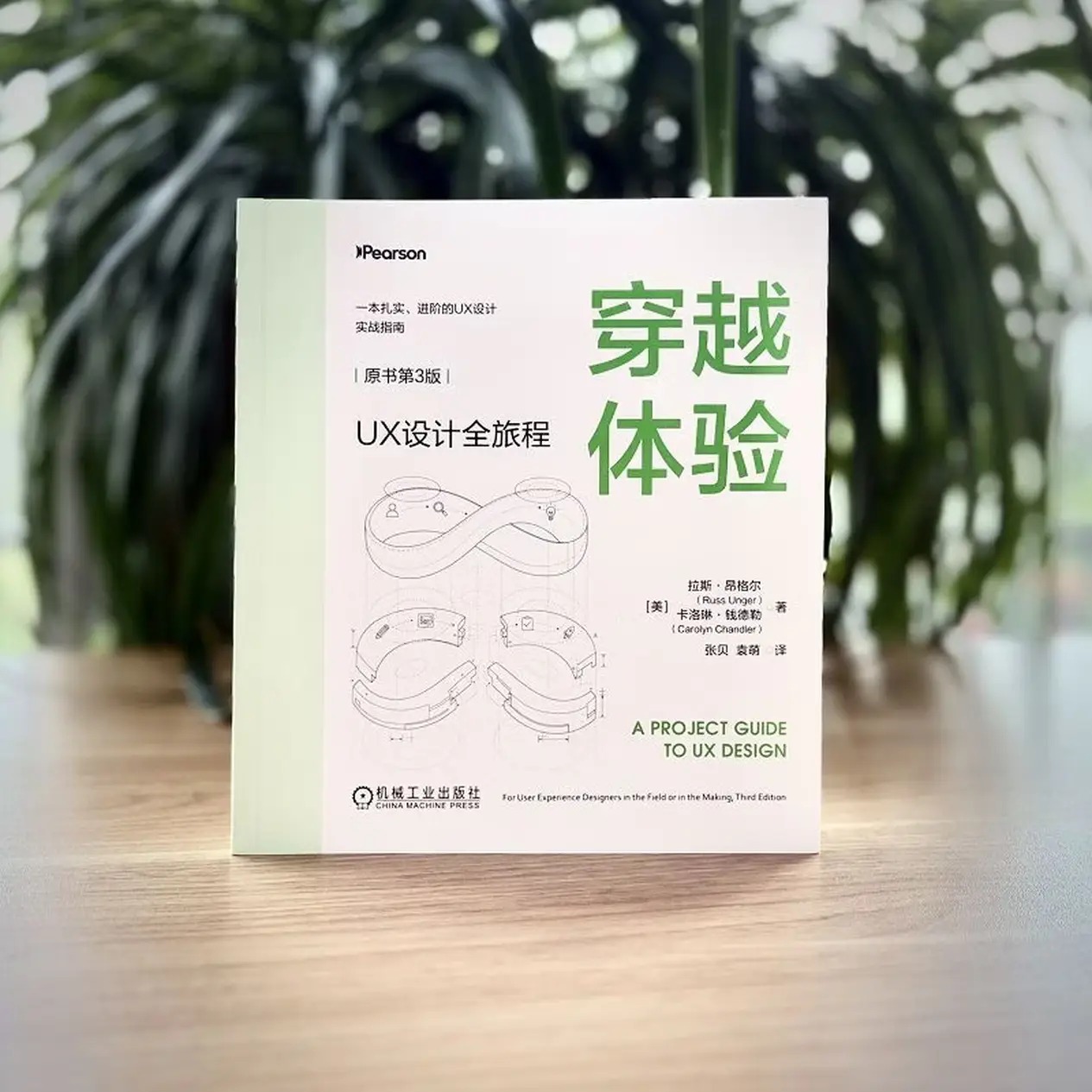
拉斯·昂格尔 / 卡洛琳·钱德勒 著 · 张贝 袁萌 译 A Project Guide to UX Design · 3rd Edition (Chinese)
Unger & Chandler · Trans. Zhang Bei & Yuan Meng
AI 百变中的不变Constants amid AI churn
分享从翻译初衷聊起。张贝坦言起初怀疑这是一本"口水书", 但读完初稿后态度反转——它把大家平时只做不说的经验,变成了可复制的教科书。 The talk began with why the book was translated. Bei Ye admitted he first suspected a shallow read — then reversed after the first draft: it turns what everyone does but never articulates into a repeatable textbook.
以不变应万变Standing firm amid change
面对 AI 爆发,原作者曾犹豫是否还要探讨经典设计领域,最终选择坚定保留。 作者坦言无法预判 AI 的未来趋势,索性聚焦经典的设计与体验判断—— 越是工具快速迭代,守住底层逻辑越是核心。 Facing the AI wave, the authors hesitated over whether to keep the classic design chapters — and chose to keep them. They admit they cannot predict AI's next turn, so they focus on timeless design and experience judgment: the faster tools iterate, the more holding to the fundamentals matters.
深挖"冷启动"阶段Digging into the cold-start stage
产品落地前需要积累大量非工程化的灵感与策划。 作者有意避开 AI 工具层面的内卷,转而深挖产品诞生前的积累阶段—— 这正是全书充满"人味"的原因。 Before a product ships, it needs deep reserves of non-engineering inspiration and planning. The authors deliberately sidestep the AI-tool arms race and dig into the accumulation before a product is born — that is where the book's human warmth comes from.
把"只做不说"沉淀为方法论Turning tacit work into method
该书将当代互联网产品设计的日常经验系统化沉淀, 揭示产品体验设计背后完整的思考与验证过程, 让隐性的工作方法变成显性、可复制的体系。 The book systematizes the everyday experience of internet product design, revealing the thinking and validation behind it — turning tacit, unspoken practice into an explicit, repeatable system.
翻译:AI 降门槛,人保品质Translation: AI lowers the bar, people keep the quality
AI 辅助翻译极大降低了门槛,让译者能把精力聚焦于内容打磨。 但初稿之外的多版打磨,仍依靠译者的英文功底与专业底子完成—— 序言被评价为"有人味",这不是机器能给的。 AI-assisted translation lowered the threshold dramatically, letting the translators focus on polish. But the later drafts still rested on their command of English and the domain. The preface was praised as "human" — not something a machine provides.
一本随时查阅的"语料库"A corpus you can consult anytime
它不是教材,而是带有上下文故事的语料库:用大量真实案例讲解工具, 并复盘了被时代淘汰的产品与专家经验, 帮读者建立对行业生命周期的宏观认知。 Not a textbook but a corpus with stories and context: real cases, retired products and expert experience, helping readers build a macro view of the industry's life cycle.
青年人的启蒙课A first lesson for the young
现场有大一新生提问能否看懂,张贝直接把书赠给了提问者。 AI 能提供海量知识,却无法替代书中前辈的经验—— AI 能喂知识,但给不了"过来人"的定心丸。 A freshman asked whether he could understand the book; Bei Ye gave him a copy on the spot. AI offers oceans of knowledge but not the experience of those who came before — it feeds you knowledge, not the reassurance of someone who has been there.
全局规划与单点突破Global planning, single-point breakthrough
答疑环节被问得最多的问题:UX 与 UI 到底有什么区别。 张贝用最基础的词源逻辑,把两者的核心差异讲透了。 The most-asked question in Q&A: what exactly separates UX from UI? Bei Ye answered from the etymology itself.
岗位核心差异The core difference
UI(User Interface)负责界面视觉与交互设计; UX(User Experience)负责从灵感起点到工程化实现的整体体验规划。 本质差异在于思维模式:一个侧重界面呈现,一个强调整体规划与验证。 UI (User Interface) owns interface visuals and interaction; UX (User Experience) owns the whole journey from the first spark of inspiration to engineering delivery. The essential difference is mindset: presentation versus end-to-end planning and validation.
课程的核心What the course teaches
不是教软件操作,而是传授从灵感起点到工程化落地的 设计思维与方法策略——培养全局视角的设计能力, 打破单一技能壁垒。 Not software operations, but design thinking and strategy from inspiration to engineering — building a global view of design and breaking the single-skill ceiling.
"产品体验设计师"的启示Lessons from the "Product Experience Designer" role
腾讯 2018 年提出的这一岗位,要求具备从用研到界面落地的全栈复合能力。 行业趋势正倒逼从业者向全能型转型—— 但门槛过高导致推行受阻,能力断层是现实瓶颈。 The role Tencent proposed in 2018 demands full-stack ability from user research to interface delivery. The industry is pushing designers toward generalism — but the bar was so high that adoption stalled. The capability gap is a real bottleneck.
UX 思维的内核The kernel of UX thinking
全局感与单点突破能力,缺一不可。 张贝以自身早年"原型与视觉稿难辨"的经历为例: 懂用户只是基本功,能落地才是职场进阶的硬通货。 A global sense plus single-point breakthrough — you need both. Bei Ye recalled his early days when his prototypes were indistinguishable from visual drafts: knowing users is the baseline; shipping is the hard currency of career growth.
设计落地的底座The ground design stands on
当前体验设计师普遍的短板:懂设计思维,却缺乏工程化意识。 正如上一个时代要求设计师有"商业化 sense",这个时代的答案是工程化。 The common shortfall of experience designers today: design thinking without engineering sense. Just as the last era demanded "business sense" from designers, this era's answer is engineering.
工程化四维度Four dimensions of engineering
技术底座(技术性能)、市场定位、用户评价、产品自身定义。 设计师需从这四个维度综合考量,确保方案在真实落地中契合各方需求—— 把设计思维彻底向工程化落地看齐。 Technical foundation (performance), market positioning, user evaluation, and the product's own definition. Designers must weigh all four so their solutions hold up in real delivery — aligning design thinking with engineering from the start.
爆品是对技术底座的极限施压A hit stress-tests the stack
产品的上限是成为爆品,而爆品要求底层技术能支撑高并发与算力性能。 以微信红包为例:若技术底座无法承载"拼手速"的复杂场景, 产品体验将无从谈起。 The ceiling of a product is becoming a hit, and hits demand concurrency and compute. Take WeChat red packets: if the stack cannot carry the "fastest finger" rush, there is no experience to speak of.
做减法的判断The judgment to subtract
把产品映射为工程:优秀设计不是盲目堆砌功能, 而是在产品、用户、市场与技术之间找到契合点。 "加功能"容易,"判断不加什么"才是难点——核心壁垒往往在于克制与取舍。 Map the product to engineering: great design is not feature stacking but the fit among product, users, market and technology. Adding features is easy; deciding what not to add is the hard part — moats are built on restraint.
闭门造车的代价The cost of building behind closed doors
产品构想与用户实际感知之间存在巨大落差, 导致方案在客户现场频频"翻车"。 工程化必须死磕真实场景的可用性,而不是会议室里的完美稿。 A wide gap between the imagined product and what users actually perceive makes proposals fail on the client's site. Engineering must obsess over usability in real scenarios, not perfect drafts in meeting rooms.
设计后置趋势The design-last trend
AI 辅助生产的背景下,底层工程化能力优先, 体验塑造与品牌印象的注入将呈现后置趋势。 如同精装房交付后的个性化改造——标准化交给 AI 打地基, 设计师被解放出来做"软装",在有限约束下发挥创造力。 With AI-assisted production, engineering comes first; experience and brand are injected later. Like a furnished apartment that owners then personalize — standardization is AI's foundation work, and designers are freed to do the "soft furnishing" within constraints.
AI 拿不走的东西What AI cannot take
张贝坦言受 AI 冲击后自己变得十分谦虚,不再好为人师—— 与其跟 AI 比拼知识储备,不如死磕 AI 搞不定的判断力与"人味"。 Bei Ye admits AI has made him humble — rather than competing with AI on knowledge, he would rather hone the judgment and human warmth AI cannot reach.
洞察是价值化判断Insight is valued judgment
洞察不只是观察现象,更要带有价值层面的判断, 能发现并定义新的生活方式、工作方式或产品机会点。 真正的洞察不是对现状的复刻,而是对未来的预判。 Insight is not just observing phenomena; it carries judgment about value, able to define new lifestyles, ways of working or product opportunities. Real insight does not copy the present — it anticipates the future.
用户画像不是贴标签Personas are not labels
"用户要什么"不能仅凭单次访谈或问卷——那仅停留在观察层面。 persona 重在挖掘行为动机,与年龄、收入等人口统计学标签有本质区别。 也别把"花钱上课"当成"带薪实习":学习与研究,是两回事。 "What users want" cannot rest on a single interview or survey — that stays at observation. Personas dig into behavioral motives, fundamentally different from age-and-income demographics. And don't mistake paid classes for paid internships: learning and research are two different things.
别让工具替你判断Don't let tools decide for you
过度依赖测试会削弱判断力。 "选择不做"本身,也是一种重要的判断结论。 Over-reliance on testing weakens judgment. Choosing not to act is itself a conclusion of judgment.
品味是有限条件下的秩序感Taste is order under constraint
品味并非金钱的堆砌,而是在有限条件下规划出美的秩序感—— 物质匮乏年代的中古设计即为佐证。 它也不随物质改善而盲目攀附奢华,而是顺应自身需求生长。 Taste is not stacked money but a sense of beautiful order planned within limited conditions — mid-century design from an age of scarcity proves it. Nor does taste climb toward luxury as means improve; it grows with your own needs.
用力体验,才能输出观点Experience hard, then speak
只有极致体验才能输出观点,否则将永远困在执行角色。 赚钱不是拜金,而是获取体验的入场券; 脱离真实体验、一味追求高标准的审美,只是"穷讲究"。 Only extreme experience produces opinions; otherwise you remain an executor forever. Earning money is not worship of money — it buys the ticket to experience. High standards detached from real experience are mere pretension.
品味是团队的资产Taste is a team asset
引乔布斯之言:品味的核心价值在于建立审美共识, 引导他人理解"为何这样做是好的"。 团队品味的上限由最高决策者决定——严苛的品味能自上而下感染团队, 并沉淀为资产。 Quoting Jobs: the core value of taste is building aesthetic consensus — showing others why this is good. A team's taste ceiling is set by its top decision-maker; rigorous taste spreads top-down and settles as an asset.
AI 时代,设计师的答案Answers for designers in the AI era
弹幕最焦虑的问题:AI 时代,设计师如何避免沦为搬运工。 张贝的回答,从一则腾讯内部的见闻开始。 The most anxious question from the audience: how do designers avoid becoming AI's porters? The answer began with a story from inside Tencent.
AI 平权与 demo 泡沫AI leveling and the demo bubble
有年轻员工因 AI 技术平权提出同薪同酬,被大佬以"产出只是 demo"驳回。 AI 降低的是试错门槛,真正值钱的是把想法落地的硬实力—— 工程化落地与判断力,才是当前最稀缺的能力。 A young employee asked for equal pay on the grounds that AI had leveled the field — and was turned down because "the output was only a demo." AI lowers the cost of trial and error; what is truly valuable is the hard power of shipping. Engineering delivery and judgment are the scarcest abilities now.
超级个体也需要超级团队Super individuals still need super teams
"超级个体不需要超级团队"的说法并不成立。 同样的创意,因个人品味与后续规划不同,产出天差地别—— 核心壁垒从来不是那个点子,而是落地与迭代。 面对复杂的供应链与工程化挑战, 超级个体同样离不开团队协作,才能把灵感转化为真正的产品。 The claim that "super individuals don't need super teams" does not hold. The same idea, carried by different taste and follow-through, ends worlds apart — the moat is never the idea, but delivery and iteration. Facing supply chains and engineering complexity, even super individuals need a team to turn inspiration into a real product.
诚意度决定转化Sincerity decides conversion
以医美广告为例:AI 生成的华丽海报,会让用户质疑商家的诚意与尊重, 反而成了劝退用户的减分项。 好设计无关繁简——缺乏诚意,再炫技的作品也毫无价值。 Take medical-aesthetic ads: gorgeous AI posters make users question the merchant's sincerity and respect — a deduction, not a plus. Good design is neither simple nor ornate; without sincerity, the flashiest work is worthless.
人机协同的正确姿势The right way to work with AI
张贝分享自己的工作流:坚持先手绘草图, 再借助 AI 提取轮廓与材质进行细化—— 用传统基本功驾驭新工具,而不是被工具牵着走。 Bei Ye shared his workflow: hand-drawn sketches first, then AI extracts contours and materials for refinement — riding new tools on old fundamentals, not being led by them.
AI 幻觉:尝试但不依赖AI hallucination: try, but don't rely
结合与 Figma 团队的交流:AI Agent 能高效完成组件拼配, 却做不了 Logo 等高度抽象的设计。 现阶段对 AI 工具的态度应是"尝试但不依赖"——它是辅助插件,不是主力军。 From exchanges with the Figma team: AI agents assemble components efficiently but cannot do highly abstract work like logos. The right attitude now is "try, but don't rely" — it is an assistant plugin, not the main force.
设计师会越来越多There will be more designers
一个反直觉的判断:技术平权之后,研发能用 AI 实现功能, 却往往缺乏打动人心的设计感,进而萌生改良意图——这正是设计介入的契机。 未来具备设计意图的人才是增量,设计的价值在于提供"购买理由"。 A counterintuitive call: after technical leveling, engineers can ship features with AI but often lack the design sense that moves people — which is exactly where design enters. The future increment is people with design intent; design provides the "reason to buy."
成为横向创造者Become a lateral creator
打破单线学习模式,同时涉猎多领域知识。 单一技能无法构筑护城河,工程化思维与设计思维的结合才能快速解题。 只要始终秉持"让用户用上更好的产品",设计师就永远不会失业。 Break single-track learning and range across domains. A single skill is no moat; engineering thinking plus design thinking solves problems fast. Hold to "let people use better products," and designers will never be out of work.
B 端与 C 端,没有本质区别B2B and B2C are not essentially different
经典面试题的答案:无论 B 端、C 端还是 G 端, 最终使用者都是具体的人。设计的核心始终是"以人为本"—— 脱离真实场景的设计,最终只会变成不复购与昂贵的定制包袱。 The classic interview answer: whether B, C or G, the end user is a specific human being. The core of design is always "people-first" — design detached from real scenarios ends as lost repurchases and expensive custom burdens.
“AI 能喂给你知识,但给不了你‘过来人’的定心丸。” "AI can feed you knowledge, but not the reassurance of someone who has been there."
“加功能容易,判断不加什么,才是难点。” "Adding features is easy; deciding what not to add is the hard part."
“品味不是金钱的堆砌,而是有限条件下规划出的秩序感。” "Taste is not stacked money, but order planned within limited conditions."
“好设计无关繁简,缺乏诚意,再炫技也毫无价值。” "Good design is neither simple nor ornate; without sincerity, the flashiest work is worthless."
不变的东西,值得再说一遍。What does not change is worth repeating.
经典的底气来自积累——AI 百变,底层逻辑不变。Classics draw their confidence from accumulation — AI churns, fundamentals hold.
工程化是地基,设计是后置的体验与品牌。Engineering is the foundation; design is the experience and brand layered on after.
AI 时代最稀缺的,是判断力、品味与诚意。The scarcest things in the AI era are judgment, taste and sincerity.